 Cryobank
 Donor Database
 Egg donation


What is PGT-A? A Patient's Guide to Preimplantation Genetic Testing for Aneuploidy
Your IVF clinic mentions PGT-A. You see it listed on your treatment plan as an optional test. Your doctor says it "screens embryos for chromosome problems." But you're left with questions: What exactly does that mean? Is it worth the cost? Will it guarantee success?
PGT-A (Preimplantation Genetic Testing for Aneuploidy) is a genetic screening test performed on embryos created during an IVF cycle. Its purpose is to identify embryos with the correct number of chromosomes (46 in humans), giving you the best chance of a healthy pregnancy. By selecting a chromosomally normal (euploid) embryo for transfer, PGT-A can increase pregnancy rates per transfer by 10-20 percentage points, can reduce miscarriage risk, and lower the chance of certain chromosome abnormalities like Down syndrome (though standard prenatal testing is still recommended).[1]

Aneuploidy: An incorrect number of chromosomes—either too many or too few. Common examples:
- Trisomy 21 (Down syndrome): 3 copies of chromosome 21 instead of 2 (47 total chromosomes)
- Monosomy X (Turner syndrome): Only 1 sex chromosome instead of 2 (45 total chromosomes)
- Trisomy 16: 3 copies of chromosome 16 (incompatible with life; causes early miscarriage)
Why does aneuploidy happen?
Most aneuploidy occurs during egg or sperm formation, when chromosomes fail to separate properly (called "nondisjunction"). This is a random error that increases dramatically with maternal age. As women age, the cellular machinery that divides chromosomes becomes less precise.[3]
Aneuploidy is the leading cause of:
- Implantation failure (70% of failed IVF cycles)[4]
- Early miscarriage (60-70% of first-trimester losses)[5]
Some live births with chromosome disorders (like Down syndrome, which occurs in 1 in 700 births)
Aneuploidy Risk by Maternal Age
|
Maternal Age |
Aneuploidy Rate in Embryos |
|
Under 30 |
30-40% |
|
30-34 |
35-45% |
|
35-37 |
40-50% |
|
38-40 |
50-60% |
|
41-42 |
60-70% |
|
43+ |
75-85% |
(Data from Franasiak et al., 2014)[2]
Key takeaway: Aneuploidy is not caused by anything you did or didn't do. It's a biological reality of human reproduction. PGT-A doesn't prevent aneuploidy—it identifies which embryos are affected so you can transfer a euploid one.


✓ Women age 35 and older
As shown in the table above, aneuploidy rates rise sharply after 35. Using PGT-A helps identify the euploid embryos among a cohort where 50%+ may be aneuploid.
✓ History of recurrent miscarriage
If you've had 2+ early pregnancy losses, chromosome aneuploidy is a likely cause. PGT-A can help select an embryo less likely to miscarry.
✓ Multiple failed IVF cycles
If you've transferred multiple embryos without successful implantation, aneuploidy may be the culprit. PGT-A increases implantation rates by ensuring the embryo you transfer is chromosomally capable of developing.
✓ Previous pregnancy affected by chromosome abnormality
If you've had a pregnancy with trisomy or other abnormality, future embryos may also be at higher risk.
✓ Desire for single embryo transfer with confidence
Many patients want to transfer only one embryo to avoid multiples (twins/triplets), but worry about success rates. PGT-A allows confident single embryo transfer (eSET) by confirming chromosomal normalcy, maintaining high success rates while eliminating multiple pregnancy risk.[7]
✓ Severe male factor infertility
Some studies suggest higher aneuploidy rates in embryos created via ICSI with severe sperm abnormalities, though this is debated.
Who might NOT need PGT-A?
- Women under 35 with no miscarriage history and good embryo quality
- Patients with very few embryos (1-2 total) where testing all may leave no euploid embryos for transfer
- Those who prefer to transfer without genetic testing for personal, religious, or ethical reasons
The decision to use PGT-A is personal. Discuss your family history, age, IVF history, and goals with your fertility specialist and genetic counselor.


Step 1: Embryo Development (Days 1-5/6/7)
Your IVF cycle proceeds normally:
- Ovarian stimulation → egg retrieval → fertilization (standard IVF or ICSI) → embryo culture
Embryos are grown in the lab for 5-7 days until they reach the blastocyst stage (100-200 cells with distinct structures). PGT-A is only performed on blastocysts, not earlier-stage embryos, because blastocysts have enough cells for biopsy without harming the embryo.[8]
Step 2: Embryo Biopsy (Day 5/6/7)
An embryologist performs a trophectoderm biopsy: 5-10 cells are carefully removed from the outer layer of the blastocyst (the trophectoderm, which will become the placenta). The inner cell mass (which becomes the baby) is not touched.
Is the biopsy safe? Yes. Decades of data show that trophectoderm biopsy does not harm the future baby or reduce pregnancy success rates.[9] The embryo has over 100 cells at this stage, and removing 5-10 from the placental layer does not affect the fetus.


Step 3: Embryo Freezing (Cryopreservation)
Immediately after biopsy, embryos are frozen (vitrified) using ultra-rapid freezing. This is necessary because PGT-A results take 1-2 weeks. All PGT-A cycles require frozen embryo transfer (FET).[10]
The embryos remain safely frozen while the biopsied cells are sent to a genetic testing laboratory for analysis.
Step 4: Chromosomal Analysis (1-2 Weeks)
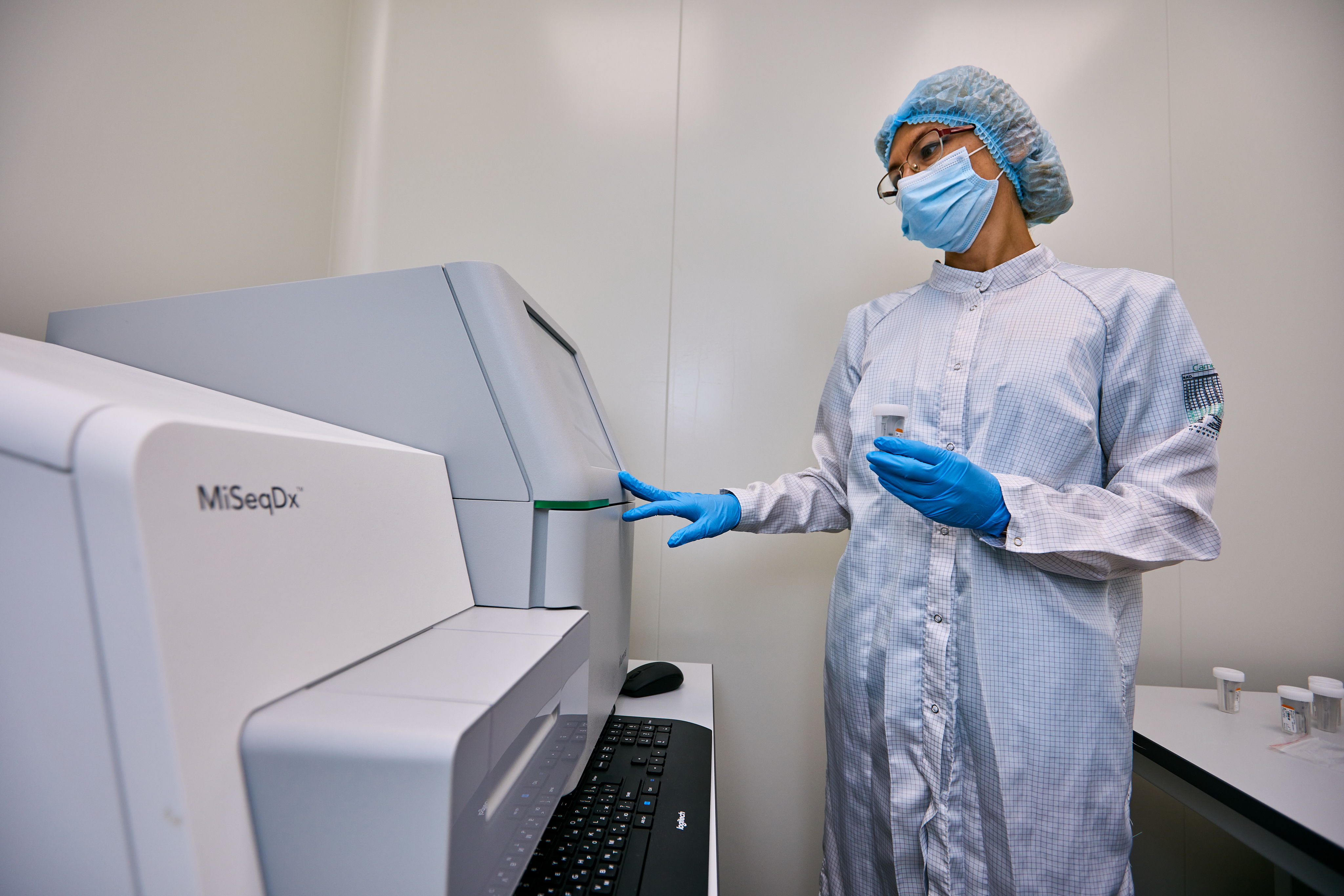
The lab extracts DNA from the biopsied cells and uses advanced genetic test technology (typically Next-Generation Sequencing, or NGS) to count the chromosomes in each embryo.
The lab checks all 23 chromosome pairs (22 autosomes plus the sex chromosomes X and Y) to determine if each embryo is:
- Euploid (normal: 46 chromosomes)
- Aneuploid (abnormal: extra or missing chromosomes)
- Mosaic (a mix of normal and abnormal cells—more on this below)


Step 5: Reviewing Results and Selecting an Embryo for Transfer
Your fertility clinic receives the PGT-A report. You meet with your doctor (and often a genetic counselor) to review the findings. Based on the PGT results, you select the best embryo (euploid) for transfer.
The euploid embryo is thawed and transferred in a subsequent cycle (usually 1-2 months after retrieval).

Euploid Embryos: Your Best Candidates
An euploid embryo has the correct number of chromosomes (46). This is the ideal result. Euploid embryos have:[1][7]
- 60-70% chance of implantation per transfer (compared to 30-40% without PGT-A)
- Significantly lower miscarriage rates (8-10% vs 20-30% for unscreened embryos)
- Very low risk of chromosome abnormalities like Down syndrome (though not zero—see limitations section)
If you have multiple euploid embryos, your doctor will prioritize transfer based on embryo morphology (grade) and possibly your personal preferences (e.g., if you want to know the sex).
Aneuploid Embryos: Not Recommended for Transfer
Aneuploid embryos have an incorrect number of chromosomes. Common aneuploidies seen in PGT-A reports:
- Trisomy 15, 16, 21, 22 (3 copies instead of 2)
- Monosomy X (only 1 X chromosome instead of 2)
- Complex aneuploidy (multiple chromosome errors)
Why not transfer aneuploid embryos?
95%+ of aneuploid embryos will either:
- Fail to implant
- Result in early miscarriage (usually before 8-10 weeks)
- In rare cases (like Trisomy 21), result in a live birth with a chromosome disorder[11]
Aneuploid embryos are typically not transferred. They remain frozen but are not used, or they may be discarded or donated to research (per your consent).


Mosaic Embryos: The Complex Middle Ground
A mosaic embryo is one where some cells are euploid and others are aneuploid. For example, 30% of cells have trisomy 16, while 70% are normal.
How does mosaicism happen?
Mosaicism occurs when chromosome errors arise during early embryo development (after fertilization), causing some cells to be abnormal while others remain normal. This is different from full aneuploidy, which starts at fertilization.[12]
Can mosaic embryos result in healthy babies?
Yes. Studies show that mosaic embryos can self-correct (the abnormal cells may die off or be excluded from the developing fetus) and result in healthy pregnancies in 30-50% of cases—lower than euploid (60-70%) but higher than aneuploid (<5%).[13][14]
When are mosaic embryos transferred?
If you have no euploid embryos available, your fertility specialist may recommend transferring a mosaic embryo after detailed genetic counseling. Factors considered:
- Percentage of mosaicism: Low-level mosaicism (20-40%) is more favorable than high-level (60-80%)
- Which chromosome is affected: Some chromosomes (like 16, 22) are less likely to cause problems than others (like 13, 18, 21)
- Your age and number of embryos available
- Your comfort level with uncertainty
Important: If a mosaic embryo results in pregnancy, comprehensive prenatal genetic testing (amniocentesis or CVS) is recommended to confirm the fetus is chromosomally normal.[15]
Segmental Mosaicism: Partial Chromosome Changes
Segmental mosaicism is a variant where some cells have a partial chromosome deletion or duplication (not a whole chromosome aneuploidy). For example, part of chromosome 7 is missing in 40% of cells.
Segmental mosaicism is even more complex than regular mosaicism. Transfer decisions are made case-by-case with extensive genetic counseling.[16]


No Result / Inconclusive
Occasionally, PGT-A labs cannot generate a result due to:
- Poor sample quality (not enough DNA extracted)
- Technical issues
- Embryo degradation during biopsy
If this happens, the embryo may be re-biopsied (if it has enough cells), or it may be excluded from PGT and transferred based on morphology alone.
The Advantages of PGT-A
- Increased Pregnancy Rates Per Transfer
By transferring only euploid embryos, PGT-A improves implantation rates. Studies show pregnancy rates per embryo transfer increase by 10-20 percentage points compared to transferring unscreened embryos.[1][7]
Example: Without PGT-A, pregnancy rate per transfer: 40-50%. With PGT-A (euploid embryo only): 60-70%.
- Significantly Reduced Miscarriage Rates
Aneuploidy causes 60-70% of first-trimester miscarriages. PGT-A eliminates most of these by avoiding aneuploid embryo transfers. Miscarriage rates drop from 20-30% (unscreened) to 8-10% (PGT-A screened).[5][18] - Decreased Time to Pregnancy
By avoiding failed transfers of aneuploid embryos, PGT-A reduces the number of IVF cycles needed to achieve pregnancy. For women over 38, this can save 6-12 months.[19] - Confidence in Single Embryo Transfer
PGT-A allows you to confidently transfer one embryo (reducing twin/triplet risk) while maintaining high success rates. Without PGT-A, clinics often transfer 2 embryos to improve odds, increasing multiple pregnancy risk.[7] - Reduced Chromosome Disorder Risk
Although PGT-A is not 100% accurate, it significantly reduces the chance of live birth with conditions like Down syndrome (Trisomy 21) or Edwards syndrome (Trisomy 18).[20]


What PGT-A Cannot Do (Limitations)
- It's a Screening Test, Not a Diagnostic Test
PGT-A analyzes 5-10 cells from the trophectoderm. There's a small chance (<5%) of false positive (calling a normal PGT-A embryo aneuploid) or false negative (calling an aneuploid embryo euploid) due to mosaicism or technical error.[21]
This is why standard prenatal screening (NIPT, ultrasound, amniocentesis) is still recommended during pregnancy, even after PGT-A.
- PGT-A Cannot Check for Single-Gene Disorders
PGT-A checks chromosome quantity, not gene mutations. It won't detect cystic fibrosis, Tay-Sachs, sickle cell, or other single-gene disorders. For those, you need PGT-M.[22] - It Doesn't Guarantee a Live Birth
Even euploid embryos have a 30-40% chance of not implanting or resulting in pregnancy loss due to factors unrelated to chromosomes: uterine issues, immune factors, blood clotting disorders, or unknown causes.
PGT-A may help, but it's not a guarantee.
- It Doesn't Address All Pregnancy Risks
PGT-A reduces chromosome-related miscarriage, but it doesn't prevent other complications: preterm birth, placental issues, gestational diabetes, preeclampsia. Comprehensive prenatal care is essential. - Not All Mosaic Embryos Are Problematic
PGT-A may flag mosaic embryos as "abnormal," but many can self-correct and result in healthy babies. Discarding all mosaic embryos may reduce your chances if you have limited embryos.[13][14] - Cost and Emotional Burden
PGT-A adds $3,000-$5,000 to IVF costs (often not covered by insurance). It also requires frozen embryo transfer, extending your timeline by 1-2 months. And learning that most or all of your embryos are aneuploid can be emotionally devastating.

Make an appointment
